Meteorological data-sharing system of the World Meteorological Organization
LIU Yufu1(), BAI Yuqi1,2()
1. Department of Earth System Science, Ministry of Education Ecological Field Station for East Asian Migratory Birds and Their Habitatses, Institute for Global Change Studies, Tsinghua University, Beijing 100084, China 2. Tsinghua Urban Institute, Tsinghua University, Beijing 100084, China
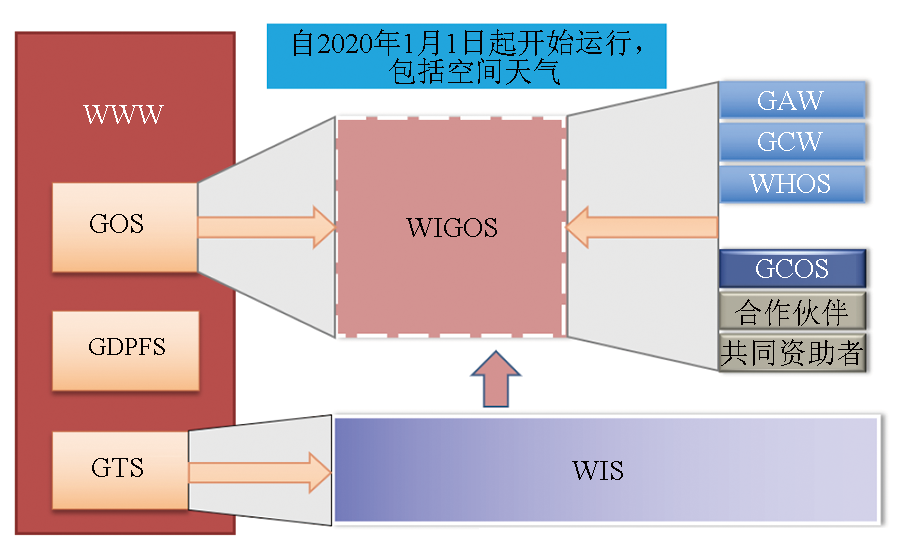
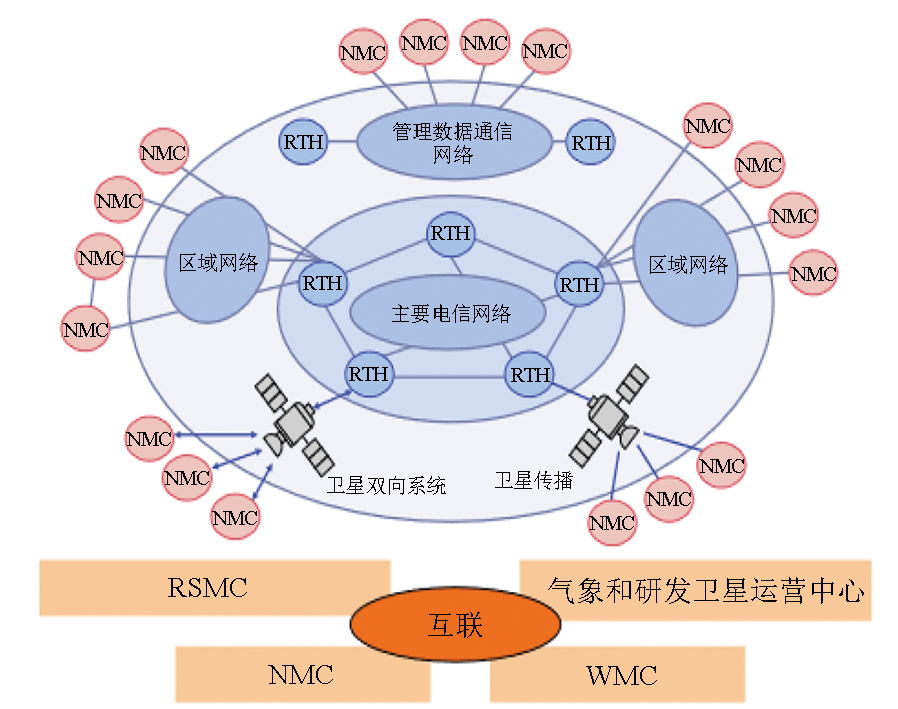
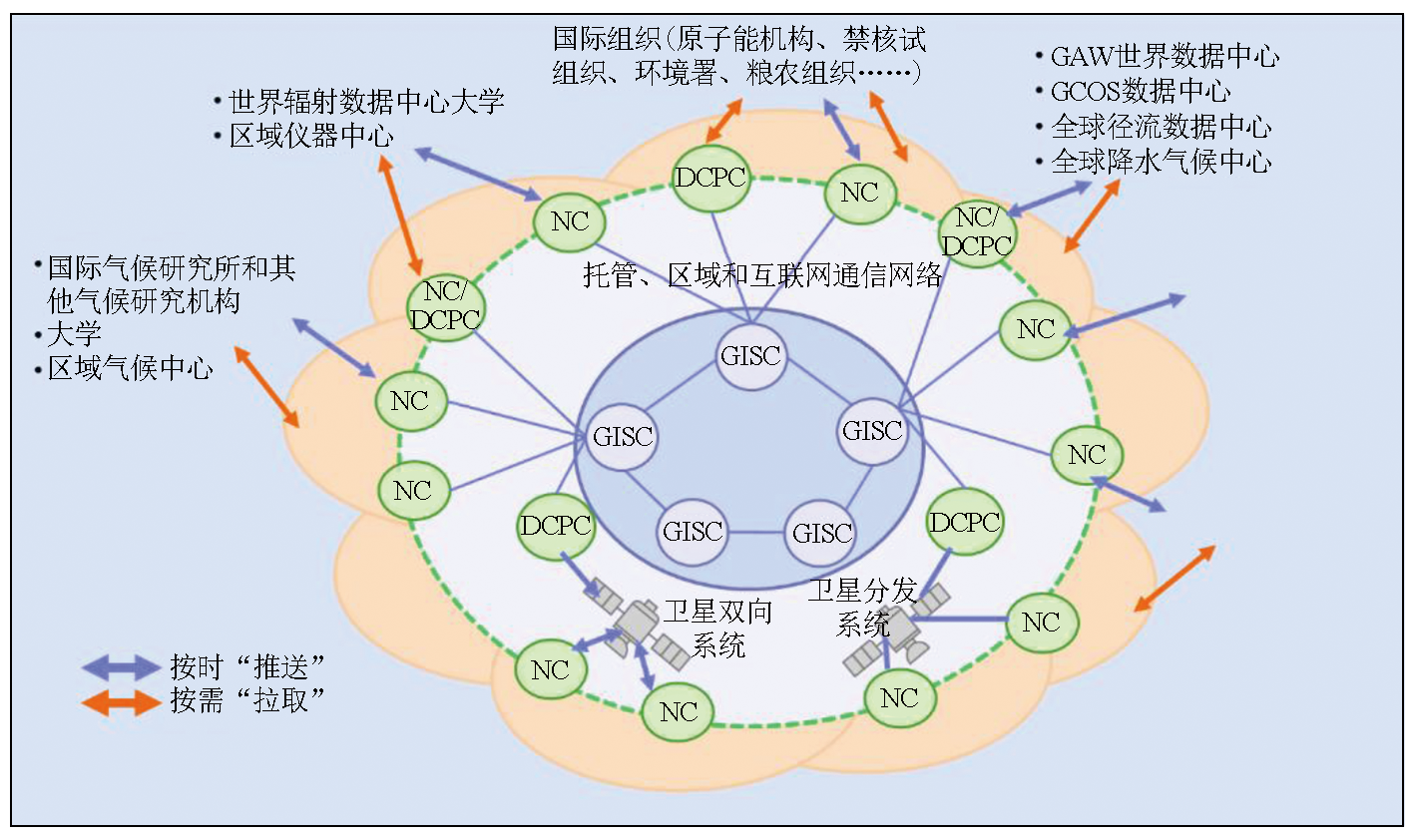
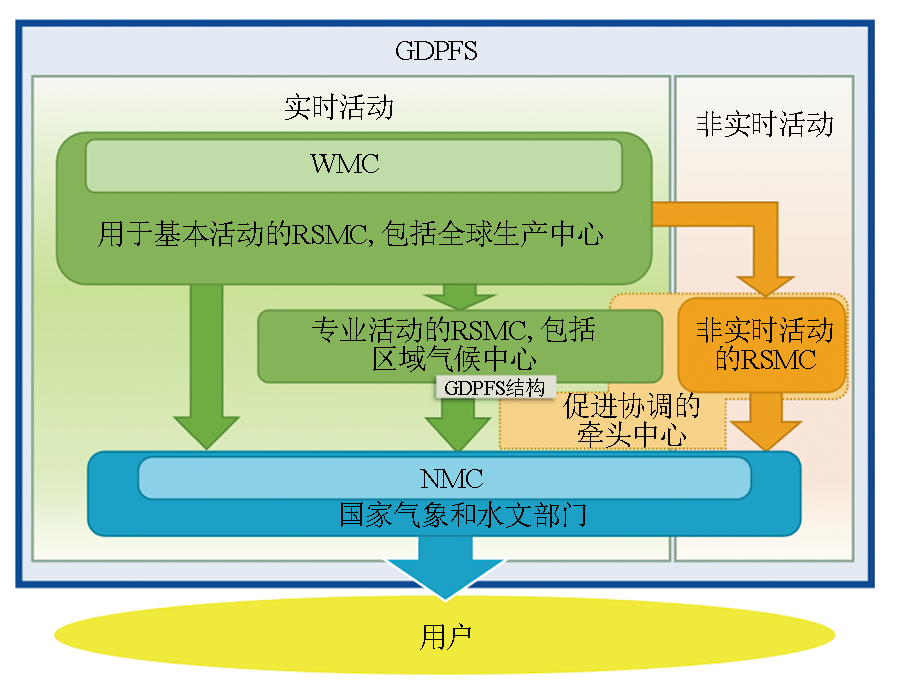
Through over 70 years of development, the World Meteorological Organization (WMO) has established a global data-sharing network that covers 193 members. This study analyzed the WMO’s meteorological data-sharing system from two aspects: system architecture and composition, and management norms and standards. The meteorological data-sharing system comprises the global observing system (GOS), the global telecommunication system (GTS), the WMO information system (WIS), and the global data-processing and forecasting system (GDPFS). Specifically, the GOS coordinates and schedules observational facilities from land and marine stations, aircraft, environmental satellites, and other platforms. The GTS manages the real-time collection and distribution of meteorological information. The WIS is responsible for discovering, accessing, and managing data and products. The GDPFS provides various climate forecasting data to users. By formulating a unified data policy and establishing this meteorological data-sharing system, the WMO has enabled the global sharing of Earth system science data in multiple fields, such as weather, climate, hydrology, atmospheric composition, cryosphere, and oceans. This study summarizes the achievements of WMO’s meteorological data-sharing system and its alignment with China’s relevant data strategy requirements. It assists in enhancing the understanding of international meteorological data-sharing activities and facilitating the construction of a similar multi-departmental comprehensive Earth observation data-sharing system in China.
刘昱甫, 白玉琪. 世界气象组织数据共享体系分析[J]. 自然资源遥感, 2025, 37(6): 1-9.
LIU Yufu, BAI Yuqi. Meteorological data-sharing system of the World Meteorological Organization. Remote Sensing for Natural Resources, 2025, 37(6): 1-9.
World Meteorological Organization. WMO unified data policy resolution (Res.1)[EB/OL].(2021-04-27)[2022-11-02].https://wmo.int/wmo-unified-data-policy-resolution-res1.
[2]
World Meteorological Organization. WMO unified data policy[M]. Geneva: WMO, 2022.
[3]
World Meteorological Organization. World weather watch[EB/OL].(2015-09-10)[2022-11-02].https://wmo.int/world-weather-watch.
[4]
World Meteorological Organization. Global observing system[EB/OL].(2015-09-17)[2022-11-02].https://wmo.int/activities/global-observing-system-gos/global-observing-system-gos.
Zhang W J. Interpretation of world meteorological organization’s global integrated observing system (WIGOS) space part’s vision development plan in 2040[J]. Advances in Meteorological Science and Technology, 2016, 6(1):135-145.
Wang F D, Wang P. Research on transfer model of international meteorological telecommunication system[J]. Computing Technology and Automation, 2019, 38(4):156-161.
[7]
Love G. The birth of the WMO information system[J]. Bulletin of the World Meteorological Organization, 2006, 55(4):232-238.
[8]
World Meteorological Organization (WMO). Guide to the WMO integrated global observing system (WMO-No.1165)[M]. Geneva: WMO, 2019.
[9]
Pecora S, Lins H F. E-monitoring the nature of water[J]. Hydrological Sciences Journal, 2020, 65(5),683-698.
doi: 10.1080/02626667.2020.1724296
[10]
World Meteorological Organization. WMO WIGOS 2040 and data policy[EB/OL].[2023-08-23].https://wmo.int/sites/default/files/2023-10/WMO_WIGOS_2040_AND_DATA_POLICY.pdf.
[11]
World Meteorological Organization. Annex VIII to the WMO Technical Regulations[M]// Manual on the WMO integrated global observing system (WMO-No.1160)Geneva:WMO, 2021.
[12]
World Meteorological Organization. Vision for the WMO Integrated Global Observing System in 2040[M]. Geneva: WMO, 2020.
[13]
World Meteorological Organization. WIGOS Manual.WMO-No.1160[M]. Geneva: WMO, 2021.
[14]
World Meteorological Organization. Data and product dissemination[EB/OL].https://community.wmo.int/en/activity-areas/wmo-space-programme-wsp/data-and-product-dissemination.
[15]
World Meteorological Organization. WIS overview[EB/OL].[2022-08-23].https://community.wmo.int/en/activity-areas/wis/wis-overview.
[16]
World Meteorological Organization. WIS core components[EB/OL].https://community.wmo.int/en/activity-areas/wmo-information-system-wis/WIS%20Core%20Components.
[17]
World Meteorological Organization. Global telecommunication system (GTS)[EB/OL].[2022-08-23].https://community.wmo.int/en/activity-areas/global-telecommunication-system-gts.
[18]
Asian Disaster Preparedness Center. Critical guidelines on community-based disaster risk management[EB/OL].[2022-08-23].https://www.preventionweb.net/publication/critical-guidelines-community-based-disaster-risk-management.
[19]
World Meteorological Organization. Global data-processing and forecasting system[EB/OL].(2015-10-16)[2022-08-23].https://public.wmo.int/en/programmes/global-data-processing-and-forecasting-system.
[20]
World Meteorological Organization. Manual on the global data-processing and forecasting system:Annex IV to the WMO technical regulations[R]. Geneva: WMO,2019:148.
[21]
World Meteorological Organization. Progress activity report of the extraordinary session of the world meteorological congress (Cg-Ext.(2021))[EB/OL].(2021-10-11)[2023-08-23].https://library.wmo.int/viewer/37353/download?file=Part_II_ProgressActivity_report_CgExt.pdf&type=pdf&navigator=1.
[22]
World Meteorological Organization. General meteorological standards and recommended practices[M]// Basic Documents,2.Technical Regulations. Geneva: WMO, 2019.
[23]
Organization (WMO) W M,World Meteorological Organization (WMO). Annex VII to the WMO Technical Regulations[M]// Manual on the WMO Information System (WMO-No.1060)Geneva:WMO, 2019.
[24]
World Meteorological Organization. Annex II to the WMO Technical Regulations:Part A- Alphanumeric Codes[M]// Manual on Codes-International Codes. Geneva: WMO, 2011.
[25]
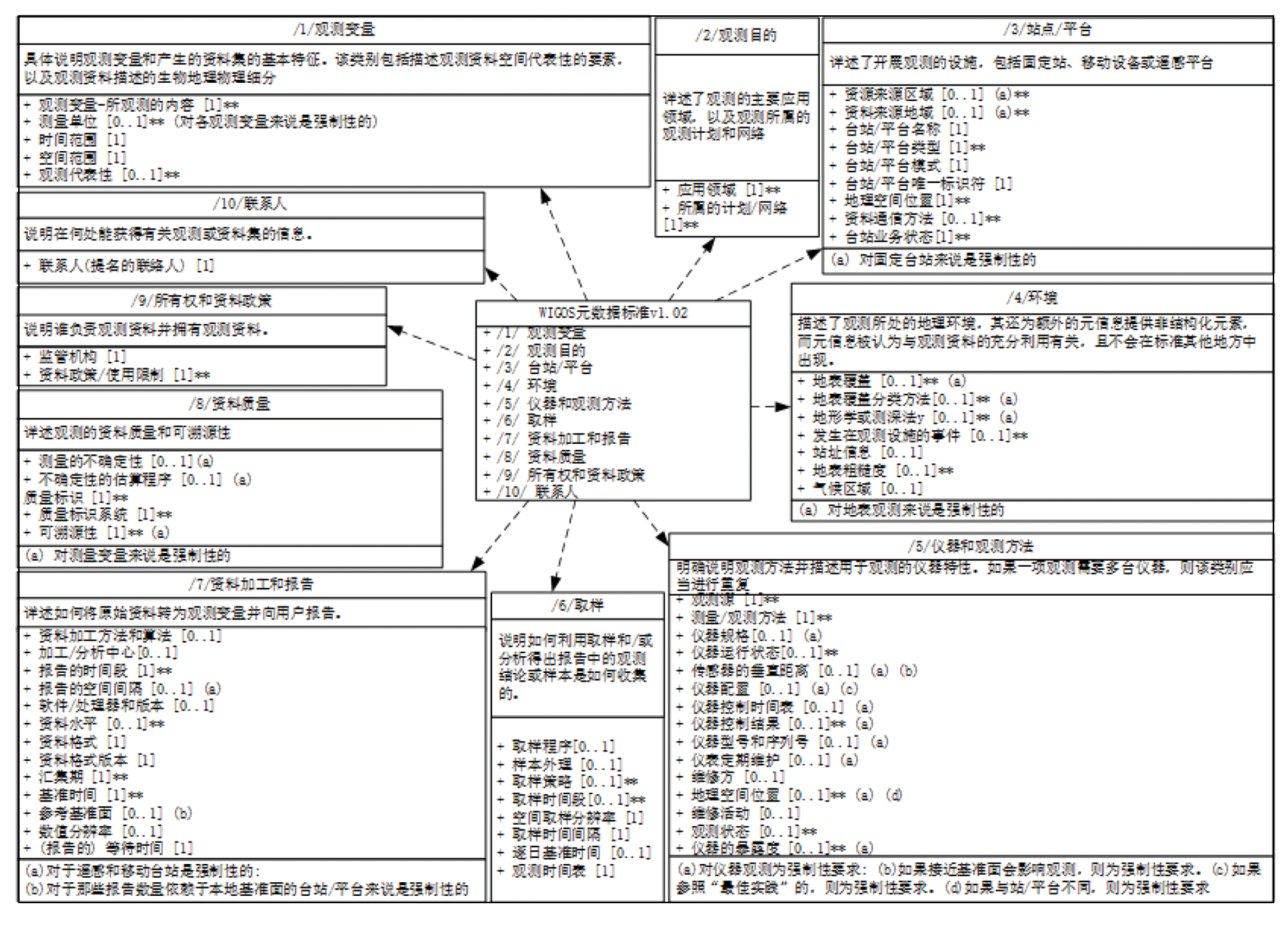
World Meteorological Organization. WIGOS metadata standard[M]. Geneva: WMO, 2019.
Li X, Wang F D, Jiang L P, et al. Research and application of the implementation technologies for WMO information system[J]. Meteorological Monthly, 2011, 37(10):1301-1308.
[27]
World Meteorological Organization. WIGOS metadata standard:WMO-No.1192[M]. Geneva: WMO, 2021.
[28]
World Meteorological Organization. Annex III to the WMO technical regulations[M]// Manual on the global telecommunication system. Geneva: WMO, 2015.
Chen P F, Zhu Y J, Chen Z H. World meteorological organization’s strategic plan and its enlightenment[J]. Advances in Meteorological Science and Technology, 2016, 6(5):64-69.
 2025, Vol. 37
  ), 白玉琪1,2(