Please wait a minute...
 
Remote Sensing for Natural Resources    2025, Vol. 37 Issue (6) : 22-40     DOI: 10.6046/zrzyyg.2022367
|
Analysis and summary of land cover classification systems
ZANG Mingrun1,2(), LIAO Yuanhong1, CHEN Zhou1, BAI Yuqi1,3()
1. Department of Earth System Science, Ministry of Education Ecological Field Station for East Asian Migratory Birds and Their Habitatses, Institute for Global Change Studies, Tsinghua University, Beijing 100084, China
2. School of Information Engineering, China University of Geosciences Beijing, Beijing 100083, China
3. Tsinghua Urban Institute, Tsinghua University, Beijing 100084, China
Download: PDF(1534 KB)   HTML
Export: BibTeX | EndNote | Reference Manager | ProCite | RefWorks    
Abstract  

Land cover classification systems constitute a significant aspect of land cover research. This study summarized nine major land cover classification systems. It presented these classification systems along with their relevant data products and analyzed the differences and connections between them. Moreover, this study discussed the relationship of their fineness with spatial resolution and coverage, as well as their semantic consistency. The results indicate that LCCS and Finer Resolution Observation and Monitoring of Global Land Cover(FROM-GLC) excel in fine-scale classification but face technical challenges and implementation difficulties in fine-scale classification based on high spatial resolution data. Current classification systems exhibit significant semantic inconsistencies in logical relationships, fine-scale classification, nomenclature, and code. Global land cover classification research shows the following development trends: the coexistence of globalization and regionalization, finer-scale classification, higher product accuracy, and more detailed temporal and spatial resolution. The semantic consistency of data products needs to be enhanced by strengthening the compatibility of classification systems and finding solutions to data product sharing and interoperability.

Keywords land cover      classification system      temporal resolution      spatial resolution      data product      semantic consistency     
ZTFLH:  TP79  
Issue Date: 31 December 2025
Service
E-mail this article
E-mail Alert
RSS
Articles by authors
Mingrun ZANG
Yuanhong LIAO
Zhou CHEN
Yuqi BAI
Cite this article:   
Mingrun ZANG,Yuanhong LIAO,Zhou CHEN, et al. Analysis and summary of land cover classification systems[J]. Remote Sensing for Natural Resources, 2025, 37(6): 22-40.
URL:  
https://www.gtzyyg.com/EN/10.6046/zrzyyg.2022367     OR     https://www.gtzyyg.com/EN/Y2025/V37/I6/22
一级类 二级类(编码+类型名)
编码 类型名
1 城镇或建成区(urban or built-up land) 11住宅用地,12商服用地,13工业用地,14交通、通信和公共设施用地,15工商综合体,16城镇或建成区混合体,17其他城镇或建成区
2 农业用地(agricultural land) 21耕地和牧场,22果园、园林、葡萄园、苗圃和园艺用地,23圈养场,24其他农用地
3 草地(rangeland) 31草本草地,32灌木和灌丛草地,33混合草地
4 林地(forest land) 41落叶林地,42常绿林地,43混合林地
5 水体(water) 51河流和沟渠,52湖泊,53水库,54海湾和河口
6 湿地(wetlands) 61有林地覆盖的湿地,62无林地覆盖的湿地
7 荒地(barren land) 71干旱盐碱地,72海滩,73沙地(不包括海滩),74裸岩,75露天矿、采石场和采砂场,76过渡带,77混合荒地
8 苔原(tundra) 81灌木与灌丛苔原,82草本苔原,83裸地苔原,84湿苔原,85混合苔原
9 冰川或永久积雪(perennial snow or ice) 91永久积雪,92冰川
Tab.1  USGS Anderson land cover classification system
一级类(编码+类型名) 二级类(编码+类型名)
1水体(water) 11开阔水域,12永久冰川/积雪
2开发用地(developed) 21已开发的、开放空间,22发达的、低强度的,23发达的、中等强度的,24发达的、高强度的
3贫瘠土地(barren) 31贫瘠土地(裸岩/沙地/裸土)
4森林(forest) 41落叶林,42常绿森林,43混交林
5灌丛地(shrubland) 51矮生灌丛,52灌木/灌木丛
7草本植被(herbaceous) 71草地/草本植物,72灌木/草本植物,73地衣,74苔藓
8种植/栽培地(planted/cultivated) 81牧场/干草,82栽培作物
9湿地(wetlands) 90有林湿地,95草洲
Tab.2  NLCD 2019 U.S. national land cover classification system
编码 类型名
1 落叶林(forest, deciduous)
2 常绿森林(forest, evergreen)
3 灌木/灌木丛(shrub/scrub)
4 草原(>10%地面覆盖)(grassland (>10% ground cover))
5 贫瘠/极少植被(<10%地面覆盖)(barren/minimal vegetation (<10% ground cover))
6 人造的其他城市建成地(man made-other, urban/built up)
7 一般农业(agriculture, general)
8 稻米/稻谷农业(agriculture rice/paddy)
9 永久/草本湿地(wetland, permanent/herbaceous)
10 红树林湿地(wetland, mangrove)
11 水体(water)
12 永久或几乎永久的冰和/或雪(permanent or nearly permanent ice and/or snow)
13 云/云影/无数据(cloud/cloud shadow/no data)
Tab.3  GeoCover LC global land cover classification system
一级类 二级类 三级类
1人工表面(artificial surfaces) 1.1城镇建筑物 1.1.1连续的城市结构,1.1.2不连续的城市结构
1.2工业、商业和交通运输用地 1.2.1工业或商业单位,1.2.2公路和铁路网络及相关土地,1.2.3港口区,1.2.4机场
1.3矿山、垃圾场和建筑工地 1.3.1矿物提取点,1.3.2垃圾场,1.3.3建筑工地
1.4人工非农业用地 1.4.1绿色城市地区,1.4.2运动和休闲设施
2农业用地(agricultural areas) 2.1耕地 2.1.1非灌溉耕地,2.1.2永久灌溉土地,2.1.3稻田
2.2多年生作物 2.2.1葡萄园,2.2.2果树和浆果种植园,2.2.3橄榄园
2.3牧场 2.3.1牧草
2.4其他农业
用地
2.4.1与长期作物相关的一年生作物,2.4.2.复合栽培,2.4.3土地主要用于农业、自然植被面积很大,2.4.4农林区
3林地和半自然用地(forests and semi-natural areas) 3.1林地 3.1.1阔叶林,3.1.2针叶林,3.1.3混交林
3.2灌木或草本植物 3.2.1自然草场,3.2.2沼泽和荒地,3.2.3硬叶植物,3.2.4过渡性林地灌木
3.3少植被或无植被覆盖的空地 3.3.1海滩、沙丘和沙地或没有植被,3.3.2裸岩,3.3.3植被稀疏的地区,3.3.4烧毁区域,3.3.5冰川和永久的雪
4湿地(wetlands) 4.1内陆湿地 4.1.1内陆沼泽,4.1.2泥炭沼泽
4.2沿海湿地 4.2.1盐沼,4.2.2盐碱地,4.2.3潮间带
5水体(water bodies) 5.1内陆水体 5.1.1水道,5.1.2水体
5.2海水 5.2.1沿海潟湖,5.2.2河口,5.2.3海和洋
Tab.4  CORINE CLC land cover classification system
编码
(IGBP)
类型名
IGBP UMD
0 水体(water bodies) 水体(water bodies)
1 常绿针叶林(evergreen needleleaf forests) 常绿针叶林(evergreen needleleaf forests)
2 常绿阔叶林(evergreen broadleaf forests) 常绿阔叶林(evergreen broadleaf forests)
3 落叶针叶林(deciduous needleleaf forests) 落叶针叶林(deciduous needleleaf forests)
4 落叶阔叶林(deciduous broadleaf forests) 落叶阔叶林(deciduous broadleaf forests)
5 混交林(mixed forests) 混交林(mixed forests)
6 郁闭灌木林(closed shrublands) 郁闭丛林或灌木林(closed bushlands or shrubland)
7 稀疏灌木林(open shrublands) 稀疏灌木林(open shrublands)
8 有林草原(woody savannas) 林地(woodlands)
9 稀树草原(savannas) 有林草原/灌木林(wooded grasslands/shrublands)
10 草原(grasslands) 草原(grasslands)
11 永久湿地(permanent wetlands)
12 农田(croplands) 农田(croplands)
13 城镇与建成区(urban and built-up) 城镇与建成区(urban and built-up)
14 农田/自然植被混合区(cropland natural vegetation mosaics)
15 永久冰雪(snow and ice)
16 裸地或稀疏植被(barren or sparsely vegetated) 裸地(barren)
Tab.5  IGBP and UMD global land cover classification systems
IGBP UMD LAI BGC PFT
编码 类型名 编码 类型名 编码 类型名 编码 类型名 编码 类型名
0/17 水体(water bodies) 0 水体(water bodies) 0 水体(water bodies) 0 水体(water bodies) 0 水体(water bodies)
1 常绿针叶林(evergreen needleleaf forests) 1 常绿针叶林(evergreen needleleaf forests) 7 常绿针叶林(evergreen needleleaf forests) 1 常绿针叶林(evergreen needleleaf forests) 1 常绿针叶林(evergreen needleleaf forests)
2 常绿阔叶林(evergreen broadleaf forests) 2 常绿阔叶林(evergreen broadleaf forests) 5 常绿阔叶林(evergreen broadleaf forests) 2 常绿阔叶林(evergreen broadleaf forests) 2 常绿阔叶林(evergreen broadleaf forests)
3 落叶针叶林(deciduous needleleaf forests) 3 落叶针叶林(deciduous needleleaf forests) 8 落叶针叶林(deciduous needleleaf forests) 3 落叶针叶林(deciduous needleleaf forests) 3 落叶针叶林(deciduous needleleaf forests)
4 落叶阔叶林(deciduous broadleaf forests) 4 落叶阔叶林(deciduous broadleaf forests) 6 落叶阔叶林(deciduous broadleaf forests) 4 落叶阔叶林(deciduous broadleaf forests) 4 落叶阔叶林(deciduous broadleaf forests)
5 混交林(mixed forests) 5 混交林(mixed forests)
2 灌木林(shrublands) 5 灌木(shrub)
6 郁闭灌木林(closed shrublands) 6 郁闭灌木林(closed shrublands)
7 稀疏灌木林(open shrublands) 7 稀疏灌木林(open shrublands)
8 有林草原(woody savannas) 8 有林草原(woody savannas)
9 稀树草原(savannas) 9 稀树草原(savannas) 4 稀树草原(savannas)
10 草原(grasslands) 10 草原(grasslands) 1 草原(grasslands) 6 草(grass)
5 一年生阔叶植被(annual broadleaf vegetation)
6 一年生草本植被(annual grass vegetation)
11 永久湿地(permanent wetlands) 11 永久湿地(permanent wetlands)
12 农田(croplands) 12 农田(croplands)
7 谷物农田(cereal croplands)
3 阔叶农田(broadleaf croplands) 8 阔叶农田(broadleaf croplands)
13 城镇与建成区(urban and built-up lands) 13 城镇与建成区(urban and built-up lands) 10 城镇与建成区(urban and built-up lands) 8 城镇与建成区(urban and built-up lands) 9 城镇与建成区(urban and built-up lands)
14 农田/自然植被混合区(cropland/natural vegetation mosaics) 14 农田/自然植被混合区(cropland/natural vegetation mosaics)
15 永久冰雪(permanent snow and ice) 10 永久冰雪(permanent snow and ice)
16 裸地(barren) 15 无植被土地(non-vegetated lands) 9 无植被土地(non-vegetated lands) 7 无植被土地(non-vegetated lands) 11 裸地(barren)
255 无类别的(unclassified) 255 无类别的(unclassified) 255 无类别的(unclassified) 255 无类别的(unclassified) 255 无类别的(unclassified)
Tab.6  MODIS land cover classification system based on IGBP, UMD, LAI, BGC, PFT
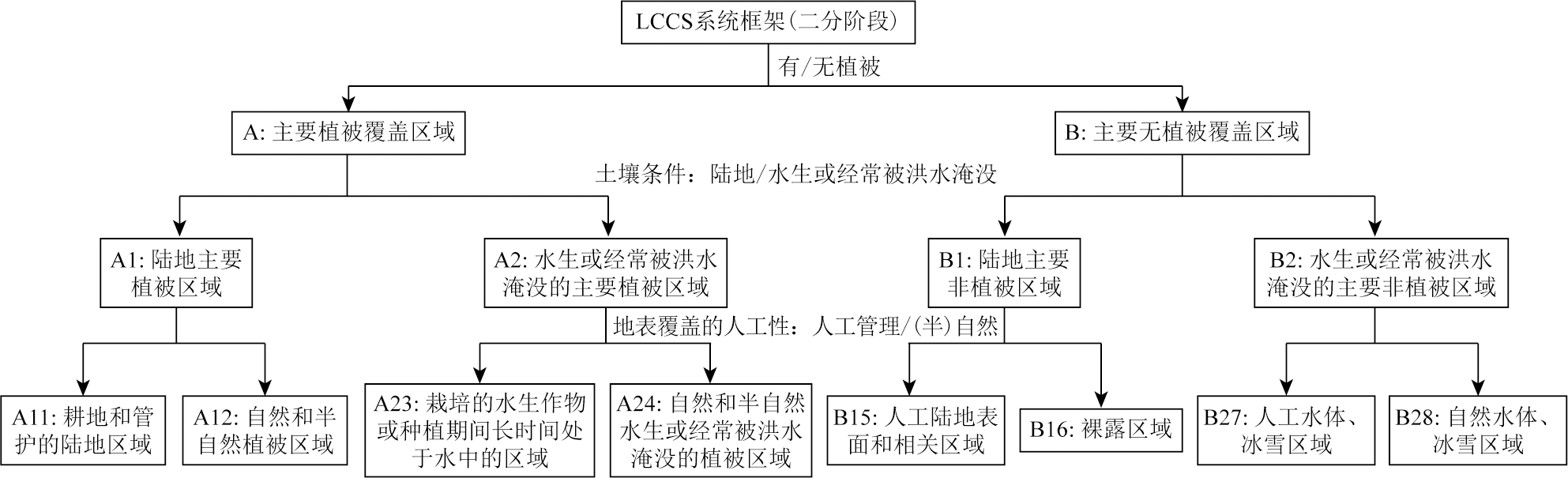
Fig.1  Design of the system framework of LCCS (dichotomous phase)
编码 类型名
1 树木覆盖,阔叶的,常绿的(tree cover, broadleaved, evergreen)
2 树木覆盖,阔叶的,落叶的,郁闭的(tree cover, broadleaved, deciduous, closed)
3 树木覆盖,阔叶的,落叶的,稀疏的(tree cover, broadleaved, deciduous, open)
4 树木覆盖,针叶的,常绿的(tree cover, needle-leaved, evergreen)
5 树木覆盖,针叶的,落叶的(tree cover, needle-leaved, deciduous)
6 树木覆盖,混合叶型(tree cover, mixed leaf type)
7 树木覆盖,经常被淹没,淡水和半咸水(tree cover, regularly flooded, fresh and brackish water)
8 树木覆盖,经常被淹没,咸水(ree cover, regularly flooded, saline water)
9 混合的:树木覆盖/其他自然植被(mosaic: tree cover/other natural vegetation)
10 树木覆盖,烧毁的(tree cover, burnt)
11 灌木覆盖,郁闭-稀疏,常绿的(shrub cover, closed-open, evergreen)
12 灌木覆盖,密闭-稀疏,落叶的(shrub cover, closed-open, deciduous)
13 草本植物覆盖,密闭-稀疏(herbaceous cover, closed-open)
14 稀疏草本植被或稀疏灌木覆盖(sparse herbaceous or sparse shrub cover)
15 经常淹没的灌木和/或草本植物覆盖(regularly flooded shrub and/or herbaceous cover)
16 耕地和管护地(cultivated and managed areas)
17 混合的:耕地/树木覆盖/其他自然植被(mosaic: cropland/tree cover/other natural vegetation)
18 混合的:耕地/灌木或草地覆盖(mosaic: cropland/shrub or grass cover)
19 裸地(bare areas)
20 水体(water bodies)
21 冰雪(snow and ice)
22 人造表面和相关区域(artificial surfaces and associated areas)
Tab.7  GLC2000 land cover classification system based on LCCS classification system
编码 类别名称
1 阔叶常绿林(broadleaf evergreen forest)
2 阔叶落叶林(broadleaf deciduous forest)
3 针叶常绿林(needleleaf evergreen forest)
4 针叶落叶林(needleleaf deciduous forest)
5 混交林(mixed forest)
6 疏林(tree open)
7 灌木(shrub)
8 草本(herbaceous)
9 疏树/灌木草本(herbaceous with sparse tree/shrub)
10 稀疏植被(sparse vegetation)
11 农田(cropland)
12 稻田(paddy field)
13 农田/其他植被混合(cropland /other vegetation mosaic)
14 红树林(mangrove)
15 湿地(wetland)
16 裸露区域,固结(砾石,岩石)(bare area, consolidated (gravel, rock))
17 裸露区域,未固结(沙)(bare area, unconsolidated (sand))
18 城市(urban)
19 冰雪(snow/ice)
20 水体(water bodies)
Tab.8  GLCNMO land cover classification system based on LCCS classification system
类别名 编码
(LCCS1)
编码
(LCCS2)
编码
(LCCS3)
裸地(barren) 1 1 1
永久冰雪(permanent snow and ice) 2 2 2
水体(water bodies) 3 3 3
城镇用地和建成区用地(urban and built-up lands) 9
茂密的森林(dense forests) 10 10
常绿针叶林(evergreen needleleaf forests) 11
常绿阔叶林(evergreen broadleaf forests) 12
落叶针叶林(deciduous needleleaf forests) 13
落叶阔叶林(deciduous broadleaf forests) 14
阔叶/针叶混交林(mixed broadleaf/needleleaf forests) 15
常绿/落叶阔叶混交林(mixed broadleaf evergreen/deciduous forests) 16
开阔的森林(open forests) 20 20
开阔的森林(open forests) 21
稀疏的森林(sparse forests) 22
森林/农田混合区(forest/cropland mosaics) 25
有林湿地(woody wetlands) 27
天然草本(grasslands) 30 30
茂密的草本(dense herbaceous) 31
稀疏草本(sparse herbaceous) 32
天然草本/农田混合(natural herbaceous/croplands mosaics) 35
草本耕地(herbaceous croplands) 36
灌木丛地(shrublands) 40 40
茂密的灌木(dense shrublands) 41
灌木/草原混合区(shrubland/grassland mosaics) 42
稀疏的灌木(sparse shrublands) 43
草本湿地(herbaceous wetlands) 50
苔原(tundra) 51
无类别的(unclassified) 255 255 255
Tab.9  MODIS land cover classification system based on LCCS
一级类(编码+地类) 二级类(编码+地类)
0无数据(no data)
10耕地,雨水灌溉(cropland, rainfed) 11草本植物覆盖; 12树叶或灌木覆盖
20耕地,灌溉的或洪水后的耕地(cropland, irrigated or postflooding)
30混合式耕地(>50%)/自然植被(树木、灌木、草本植物覆盖)(<50%)(mosaic cropland (>50%) / natural vegetation (tree, shrub, herbaceous cover) (<50%))
40混合式自然植被(树木、灌木、草本植物覆盖)(>50%)/耕地(<50%)(mosaic natural vegetation (tree, shrub, herbaceous cover) (>50%) / cropland (<50%))
50树木覆盖,阔叶树,常绿,郁闭至稀疏(>15%)(tree cover, broadleaved, evergreen, closed to open (>15%))
60树木覆盖,阔叶树,落叶树,郁闭至稀疏(>15%)(tree cover, broadleaved, deciduous, closed to open (>15%)) 61树木覆盖,阔叶树,落叶树,郁闭的(>40%); 62树木覆盖,阔叶树,落叶,稀疏的(15-40%)
70树木覆盖,针叶树,常绿,郁闭的(>40%)(tree cover, needleleaved, evergreen, closed to open (>15%)) 71树木覆盖,针叶树,常绿,郁闭的(>40%); 72树木覆盖,针叶树,落叶树,郁闭的(>40%)
80树木覆盖,针叶树,落叶树,郁闭至稀疏(>15%)(tree cover, needleleaved, deciduous, closed to open (>15%)) 81树木覆盖,针叶树,落叶树,郁闭的(>40%); 82树木覆盖,针叶,落叶树,稀疏的(15-40%)
90树木覆盖,混合叶子类型(阔叶和针叶)(tree cover, mixed leaf type (broadleaved and needleleaved))
100混合的树木和灌木(<>50%)/草本植物覆盖(<50%)(mosaic tree and shrub (>50%) / herbaceous cover (<50%))
110混合的草本植物覆盖率(>50%)/树木和灌木(<50%)(mosaic herbaceous cover (>50%) / tree and shrub (<50%))
120灌木丛地(shrubland) 121常绿灌木丛地; 122落叶灌木丛地
130草地(grassland)
140地衣和苔藓(lichens and mosses)
150稀疏的植被(树木、灌木、草本植物覆盖)(<15%)(sparse vegetation (tree, shrub, herbaceous cover) (<15%)) 151稀疏的树(<15%); 152稀疏的灌木(<15%); 153稀疏的草本植物覆盖(<15%)
160树木覆盖,被淹没,淡水或半咸水(tree cover, flooded, fresh or brakish water)
170树木覆盖,被淹没,咸水(tree cover, flooded, saline water)
180灌木或草本植物覆盖,淹没,淡水/咸水/半咸水(shrub or herbaceous cover, flooded, fresh/saline/brakish water)
190城市地区(urban areas)
200裸露区城(bare areas) 201固结的裸露区域; 202未固结的裸露区域
210水体(water bodies)
220永久性的冰雪(permanent snow and ice)
Tab.10  CCI-LC global annual land cover map classification system based on LCCS classification system
编码 类型名
11 洪水后或灌溉后的耕地(post-floodin or irrigated croplands)
14 雨水灌溉的耕地(rainfed croplands)
20 混合耕地(50%~70%)/植被(草地、灌木丛、森林)(20%~50%)mosaic cropland (50%~70%) / vegetation (grassland, shrubland, forest) (20%~50%)
30 混合植被(草地、灌丛、森林)(50%~70%)/耕地(20%~50%)(mosaic vegetation (grassland, shrubland, forest) (50%~70%) / cropland (20%~50%))
40 郁闭到稀疏的(>15%)常绿阔叶林和/或半落叶林(>5 m)(closed to open (>15%) broadleaved evergreen and/or semi-deciduous forest (>5 m))
50 郁闭的(>40%)阔叶落叶林(>5 m)(closed (>40%) broadleaved deciduous forest (>5 m))
60 稀疏的(15%~40%)阔叶落叶林(>5 m)(open (15%~40%) broadleaved deciduous forest (>5 m))
70 郁闭的(>40%)常绿针叶林(>5 m)(closed (>40%) needleleaved evergreen forest (>5 m))
90 稀疏的(15%~40%)针叶落叶或常绿林(>5 m)(open (15%~40%) needleleaved deciduous or evergreen forest (>5 m))
100 郁闭到稀疏(>15%)阔叶和针叶混交林(>5 m)(closed to open (>15%) mixed broadleaved and needleleaved forest (>5 m)
110 混交林:灌丛(50%~70%)/草地(20%~50%)(mosaic forest/shrubland (50%~70%)/grassland (20%~50%))
120 混交林:草原(50%~70%)/森林-灌丛(20%~50%)(mosaic grassland(50%~70%)/forest/shrubland (20%~50%))
130 郁闭到稀疏(>15%)灌木丛(<5 m)(closed to open (>15%) shrubland (<5 m))
140 郁闭到稀疏(>15%)草地(closed to open (>15%) grassland)
150 稀疏(>15%)植被(木本植被、灌木、草地)(sparse (>15%) vegetation (woody vegetation, shrubs, grassland))
160 郁闭(>40%)阔叶林经常被洪水淹没-淡水(closed (>40%) broadleaved forest regularly flooded - fresh water)
170 郁闭(>40%)半落叶阔叶林和/或常绿阔叶林经常被洪水淹没-咸水(closed (>40%) broadleaved semi-deciduous and/or evergreen forest regularly flooded - saline water)
180 郁闭至稀疏(> 15%)植被(草原,灌木地,木本植被)的定期泛滥或含水土壤-淡水,半咸水或盐水)(closed to open (>15%) vegetation (grassland, shrubland, woody vegetation) on regularly flooded or waterlogged soil -fresh, brackish or saline water)
190 人造表面和相关区域(城市区域>50%)(artificial surfaces and associated areas (urban areas >50%))
200 裸地(bare areas)
210 水体(water bodies)
220 永久冰雪(permanent snow and ice)
Tab.11  GlobCoverland classification system based on LCCS classification system
编码 类型名
0 没有可用输入数据
111 郁闭的森林,常绿针叶林(closed forest, evergreen needle leaf)
113 郁闭的森林,落叶针叶林(closed forest, deciduous needle leaf)
112 郁闭的森林,常绿阔叶林(closed forest, evergreen, broad leaf)
114 郁闭的森林,落叶阔叶林(closed forest, deciduous broad leaf)
115 郁闭的森林,混交林(closed forest, mixed)
116 郁闭的森林,未知(closed forest, unknown)
121 稀疏的森林,常绿针叶林(open forest, evergreen needle leaf)
123 稀疏的森林,落叶针叶林(open forest, deciduous needle leaf)
122 稀疏的森林,常绿阔叶林(open forest, evergreen broad leaf)
124 稀疏的森林,落叶阔叶林(open forest, deciduous broad leaf)
125 稀疏的森林,混交林(open forest, mixed)
126 稀疏的森林,未知(open forest, unknown)
20 灌木(shrubs)
30 草本植被(herbaceous vegetation)
90 草本湿地(herbaceous wetland)
100 苔藓及地衣植物(moss and lichen)
60 裸地/稀疏植被(bare / sparse vegetation)
40 种植和管护的植被/农业(耕地)(cultivated and managed vegetation/agriculture (cropland))
50 城市/建成区(urban / built up)
70 冰雪(snow & ice)
80 永久性水体(permanent water bodies)
200 开阔海域(open sea)
Tab.12  CGLS-LC100 land cover classification system based on LCCS classification system
0级分类体系 LCCS分类体系 精细分类体系
编码 类型名 编码 类型名
农田(cropland) 10 雨养农田 10 雨养农田
11 草本植被
12 树木或灌木覆盖物(果园)
20 灌溉农田 20 灌溉农田
森林(forest) 50 常绿阔叶林 50 常绿阔叶林
60 落叶阔叶林 60 落叶阔叶林
61 郁闭的落叶阔
叶林
62 稀疏的落叶阔
叶林
70 常绿针叶林 70 常绿针叶林
71 郁闭的的常绿针叶林
72 稀疏的常绿针叶林
80 落叶针叶林 80 落叶针叶林
81 郁闭的的落叶针叶林
82 稀疏的落叶针叶林
90 混交林 90 混交林
灌木丛(shrubland) 120 灌木丛 120 灌木丛
121 常绿灌丛
122 落叶灌丛
草原(grassland) 130 草原 130 草原
湿地(wetlands) 180 湿地 180 湿地
不透水面(impervious surfaces) 190 不透水面 190 不透水面
裸露区域(bare areas) 140 地衣和苔藓 140 地衣和苔藓
150 稀疏植被 150 稀疏植被
152 稀疏的灌丛
153 稀疏的草本
覆盖
200 裸露区域 200 裸露区域
201 固结的裸露区域
202 未固结的裸露区域
水体(water body) 210 水体 210 水体
永久冰雪(permanent ice and snow) 220 永久冰雪 220 永久冰雪
Tab.13  GLC_FCS30 2015 land cover fine classification system based on LCCS classification system
编码 精细分类体系
10 雨养农田(rainfed cropland)
11 草本植被(herbaceous cover)
12 树木或灌木覆盖物(果园)(tree or shrub cover (orchard))
20 灌溉农田(irrigated cropland)
51 稀疏的常绿阔叶林(open evergreen broadleaved forest)
52 郁闭的常绿阔叶林(closed evergreen broadleaved forest)
61 稀疏的落叶阔叶林(open deciduous broadleaved forest)
62 郁闭的落叶阔叶林(closed deciduous broadleaved forest)
71 稀疏的常绿针叶林(open evergreen needle-leaved forest)
72 郁闭的常绿针叶林(closed evergreen needle-leaved forest)
81 稀疏的落叶针叶林(open deciduous needle-leaved forest)
82 郁闭的落叶针叶林(closed deciduous needle-leaved forest)
91 稀疏的混交林(阔叶和针叶)(open mixed leaf forest (broadleaved and needle-leaved))
92 郁闭的混交林(阔叶和针叶)(closed mixed leaf forest (broadleaved and needle-leaved))
120 灌木丛(shrubland)
121 常绿灌丛(evergreen shrubland)
122 落叶灌丛(deciduous shrubland)
130 草原(grassland)
140 地衣和苔藓(lichens and mosses)
150 稀疏植被(sparse vegetation)
152 稀疏的灌丛(sparse shrubland)
153 稀疏的草本覆盖(sparse herbaceous)
180 湿地(wetlands)
190 不透水面(impervious surfaces)
200 裸露区域(bare areas)
201 固结的裸露区域(consolidated bare areas)
202 未固结的裸露区域(unconsolidated bare areas)
210 水体(water body)
220 永久冰雪(permanent ice and snow)
250 填充值(filled value)
Tab.14  GLC_FCS30-2020 land cover fine classification system based on LCCS classification system
一级类(编码+地类) 二级类(编码+地类)
10耕地和管理地(cultivated and managed areas) 10耕地和管理地
20树(tree) 21常绿阔叶
22落叶阔叶,郁闭,有叶
23落叶阔叶,郁闭,落叶
24落叶阔叶,稀疏,有叶
25落叶阔叶,稀疏,落叶
26常绿针叶
27落叶针叶,有叶
28落叶针叶,落叶
29混合叶型,有叶
30混叶型,落叶
31树木覆盖,烧毁(tree cover, burnt) 31树木覆盖,烧毁
40灌木或草本覆盖(shrub cover or herbaceous) 41常绿灌木
42落叶灌木
43落叶灌木
44草本,有叶
45草本,落叶
50湿地(wetland) 51树木覆盖,定期淹没,淡水和半咸水
52树木覆盖,定期淹没,咸水
53经常被淹的灌木和/或草本覆盖,有叶
54经常被淹的灌木和/或草本覆盖,落叶
60混合的植被(mosaic-vegetation) 61树木/其他自然植被
62作物/树木/其他自然植被
63作物/灌木或草本
64落叶植被
65作物/树木/其他自然植被,落叶
66作物/灌木或草本,落叶
70非植被(non-vegetation) 71裸露区域
72水体
73人造表面和相关区域
74冰雪
80稀疏草本或稀疏灌木覆盖(sparse herbaceous or sparse shrub cover) 80稀疏草本或稀疏灌木覆盖
Tab.15  iMap World 1.0 land cover mapping classification system based on LCCS classification system
编码 土地覆盖类型
10 树木覆盖(tree cover)
20 灌木(shrubland)
30 草地(grassland)
40 农田(cropland)
50 建成区(built-up)
60 裸地/稀疏植被(bare / sparse vegetation)
70 冰雪(snow and ice)
80 永久性水体(permanent water bodies)
90 草本湿地(herbaceous wetland)
95 红树林(mangroves)
100 苔藓及地衣植物(moss and lichen)
Tab.16  WorldCover 10 m land cover classification system based on LCCS classification system
编码 类型
01 人工地表(artificial surfaces)
02 耕地(cropland)
03 草地(grassland)
04 树木覆盖区(tree covered areas)
05 灌木覆盖区(shrubs covered areas)
06 草木植被、水生或定期淹没(herbaceous vegetation, aquatic or regularly flooded)
07 红树林(mangroves)
08 稀疏植被(sparse vegetation)
09 裸土(baresoil)
10 雪和冰川(snow and glaciers)
11 水体(water bodies)
Tab.17  GLC-SHARE global land cover summary categories based on LCCS classification system
编码 类别
1 树木覆盖(tree cover)
2 灌木覆盖(shrub cover)
3 草本植被/草地(herbaceous vegetation/grassland)
4 栽培和管理的植被(cultivated and managed)
5 栽培和管理/自然植被的镶嵌(mosaic of cultivated and managed/natural vegetation)
6 洪泛/湿地(flooded/wetland)
7 城市(urban)
8 雪和冰(snow and ice)
9 裸地(barren)
10 地表水(open water)
Tab.18  GeoWiki Hybrid land cover classification system based on LCCS
编码 类型
10 耕地(cultivated land)
20 林地(forest)
30 草地(grassland)
40 灌木地(shrubland)
50 湿地(wetland)
60 水体(water bodies)
70 苔原(4个亚类型: 71灌木苔原、72禾本苔原、73湿苔原与74裸地苔原)(tundra)
80 人造地表(artificial surfaces)
90 裸地(bare land)
100 冰川和永久积雪(permanent snow and ice)
Tab.19  GlobeLand30 land cover classification system
编码 类型
10 耕地(cultivated land)
20 林地(forest)
30 草地(grassland)
40 灌木地(shrubland)
50 湿地(wetland)
60 水体(water bodies)
70 苔原(tundra)
80 不透水面(artificial surfaces)
90 裸地(bare land)
100 永久冰雪(permanent snow and ice)
Tab.20  AGLC land cover classification system
一级类(编码+地类) 二级类(编码+地类)
10农地(croplands) 11水稻田,12温室,13其他农地
20森林(forest) 21阔叶林,22针叶林,23混交林,24果园
30草地(grasslands) 31牧草地,32其他草地
40灌丛(shurblands)
50湿地(wetland) 51沼泽地,52泥滩
60水体(waterbodies) 61湖,62水库/池塘,63河流,64海洋
70苔原(tundra) 71灌丛和灌丛苔原(= 40灌丛),72草本苔原
80不透水面(impervious) 81不透水层-高反照率,82不透水层-低反照率
90裸地(barren land) 91干盐滩,92沙区,93裸露的岩石,94裸露的草本耕地,95干湖/河床,96其他荒地
100冰雪(snow and ice) 101雪,102冰
999云(cloud)
Tab.21  FROM-GLC 2010 land cover classification system
一级类(编码+地类) 二级类(编码+地类)
10农地(cropland) 11水稻田; 12温室; 13其他农地; 14果园; 15裸农地
20森林(forest) 21阔叶,有叶; 22阔叶,落叶; 23针叶,有叶; 24针叶,落叶; 25混交,有叶; 26混交,落叶
30草地(grassland) 31牧草地; 32自然草地; 33自然草地,落叶
40灌丛(shrubland) 41灌丛,有叶; 42灌丛,落叶
50湿地(wetland) 51沼泽地,有叶; 52泥滩; 53沼泽地,落叶
60水体(water)
70苔原(tundra) 71灌丛苔原; 72草本苔原
80不透水面(impervious surface)
90裸地(bareland)
100冰雪(snow/ice) 101雪; 102冰
120云(cloud)
Tab.22  FROM-GLC 2015 land cover classification system
编码
(FROM-GLC30)
编码
(FROM-GLC10)
地类
1 10 农地(cropland)
2 20 森林(forests)
3 30 草地(grasslands)
4 40 灌丛(shrublands)
5 50 湿地(wetland)
6 60 水体(water)
7 70 苔原(tundra)
8 80 不透水面(impervious)
9 90 裸地(barelands)
10 100 冰雪(snow/ice)
Tab.23  FROM-GLC 2017 land cover classification system
一级类 二级类
农地(cropland) 水稻田,温室,其他农地
森林(forest) 阔叶林,针叶林,混交林,果园
草地(grassland) 人工,自然,湿地-草原,苔原-草原
灌丛(shrubland) 灌丛,苔原-灌丛
水体(water) 湖,池塘,河流,海洋
裸地(bareland) 碱土,沙,岩石,裸露的耕地,河床,其他裸地
冰雪(snow/ice) 雪,冰
Tab.24  FROM-GLC-seg land cover classification system
一级类 二级类
农地(cropland) 水稻田,温室,其他农地
森林(forests) 阔叶林,针叶林,混交林,果园
草地(grasslands) 人工,自然,湿地-草原,苔原-草原
灌丛(shrublands) 灌丛,苔原-灌丛
水体(water) 陆地水,海水
不透水面(impervious) 高反照率,低反照率
裸地(barelands) 碱土,沙,岩石,裸露的耕地,河床,其他裸地
冰雪(snow/ice) 雪,冰
云(cloud)
Tab.25  FROM-GLC-agg land cover classification system
类别 子类别
农田(cropland) 稻田,温室,其他农田,果园,裸地
森林(forest) 阔叶树、有叶,阔叶树、落叶,针叶树、有叶,针叶树、落叶,混交树种、有叶,混交树种、落叶
草地(grassland) 牧场、有叶,天然草地、有叶,草原、有叶
灌丛(shrubland) 灌木、有叶,灌木、落叶
苔原(tundra) 灌丛和矮树苔原,草本苔原
荒地(barren land) 荒地
冰雪(snow/ice) 雪,冰
Tab.26  GLASS-GLC land cover classification system based on FROM-GLC version 2 classification system
一级类(编码+地类) 二级类(编码+地类)
10农地(cropland) 11水稻田,12温室,13其他农地,14果园,15裸农地
20森林(forest) 21阔叶、有叶, 22阔叶、落叶,23针叶、有叶,24针叶、落叶,25混交、有叶,
26混交、落叶
30草地(grassland) 31牧草地、有叶,32自然草地、有叶,
33自然草地、落叶
40灌丛(shrublands) 41灌丛、有叶,42灌丛、落叶
50湿地(wetland) 51沼泽地、有叶,52泥滩,53沼泽地、
落叶
60水体(water body) 61湖,62水库/池塘,63河流,64海洋
70苔原(tundra) 71灌丛和灌丛苔原,72草本苔原
80不透水面(impervious) 80不透水层
90裸地(barren
land)
90裸地
100冰雪(snow/ice) 101雪,102冰
Tab.27  iMap World 1.0 land cover mapping classification system based on the FROM-GLC classification system
编码 类型
1 水体(water)
2 树木(trees)
4 被淹没的植被(flooded vegetation)
5 作物(crops)
7 建成区(built area)
8 裸地(bare ground)
9 冰雪(snow/ice)
10 云(clouds)
11 天然草地(rangeland)
Tab.28  Esri 10 m land cover classification system
编码 LULC类型
0 水(water)
1 树木(trees)
2 草(grass)
3 被淹没的植被(flooded vegetation)
4 作物(crops)
5 灌木和灌丛(shrub and scrub)
6 建成区(built area)
7 裸露的地面(bare ground)
8 冰雪(snow and ice)
Tab.29  Dynamic World classification system
最高空间
分辨率/m
分类体系 分类产品 类别总数量 数据对应时间 空间覆
盖范围
5 000 FROM-GLC GLASS-GLC 7 1982—2015 全球
1 000 IGBP DISCover 17 1992年4月—1993年3月 全球
1 000 IGBP UMD 14 1992年4月—1993年3月 全球
1 000 LCCS GLC2000 22 2000 全球
1 000 LCCS GLC-SHARE 11 2013 全球
500 LCCS GLCNMO 20 2003(1km),2008(1km),2013 全球
500 IGBP,UMD,LAI,BGC,PFT,LCCS MCD12Q1 18,17,12,10,13,17/12/11 2001—2020 全球
500 IGBP,UMD,LAI MCD12C1 18,17,12 2001—2020 全球
300 LCCS CCI-LC 23+15 1992—2020 全球
300 LCCS GlobCover 22 2005—2009 全球
100 CORINE CLC 5+15+44 1990,2000,2006,2012,2018 欧洲部分区域
100 LCCS CGLS-LC100 23 2015—2019 全球
30 LCCS GLC_FCS30-2015 9+16+30 2015 全球
30 LCCS GLC_FCS30-2020/GLC_FCS30-1985-2020 30 2020/1985—2020 全球
30 LCCS GeoWiki Hybrid 10 2005 全球
30 LCCS,FROM-GLC iMap World 1.0 8+33,10+29 1985—2020 全球
30 GlobeLand30 GlobeLand30 10+4(苔原) 2000,2010,2020 全球
30 AGLC AGLC-2000-2015 10 2010—2015 全球
30 FROM-GLC FROM-GLC30 (2010) 11+27 2010 全球
30 FROM-GLC FROM-GLC30 (2015) 11+23 2015 全球
30 FROM-GLC FROM-GLC30 (2017) 10 2017 全球
30 FROM-GLC FROM-GLC-seg 7+27 2010 全球
30 FROM-GLC FROM-GLC-agg 9+25 2010 全球
30 USGS NLCD 2019 8+20 2001,2004,2006,2008,2011,2013,2016,2019 美国
28.5 USGS GeoCover LC 13 1990 全球部分地区
10 FROM-GLC FROM-GLC10 10 2017 全球
10 LCCS WorldCover 10 m 11 2020,2021 全球
10 Esri 10m Land Cover Esri 10m Land Cover 9 2017—2021 全球
10 Dynamic World Dynamic World 9 2015年后(每2~5 d) 全球
Tab.30  Summary of land cover classification systems
序号 数据产品 下载链接
1 GLASS-GLC https://doi.org/10.1594/PANGAEA.913496
2 DISCover https://daac.ornl.gov/cgi-bin/dsviewer.pl?ds_id=930
3 UMD https://www.qgistutorials.com/en/docs/open_bil_bip_bsq_files
4 GLC2000 https://forobs.jrc.ec.europa.eu/glc2000
5 GLC-SHARE https://www.fao.org/land-water/land/land-governance/land-resources-planning-toolbox/category/details/en/c/1036355/
6 GLCNMO https://globalmaps.github.io/glcnmo.html#use
7 MCD12Q1 https://lpdaac.usgs.gov/products/mcd12q1v006/
8 MCD12C1 https://lpdaac.usgs.gov/products/mcd12c1v006/
9 CCI-LC http://maps.elie.ucl.ac.be/CCI/viewer/download.php
10 GlobCover https://www.esa.int/Applications/Observing_the_Earth/Space_for_our_climate/ESA_global_land_cover_map_available_online
11 CLC https://land.copernicus.eu/pan-european/corine-land-cover
12 CGLS-LC100 https://land.copernicus.eu/global/products/lc
13 GLC_FCS30-2015 https://zenodo.org/record/3986872#.ZEbv7HZBxPY
14 GLC_FCS30-2020/GLC_FCS30-1985_2020 https://zenodo.org/record/4280923#.ZEbrBXZBxPZ/ https://zenodo.org/records/8239305
15 GeoWiki Hybrid
1, 2
https://www.geo-wiki.org/
16 iMap World 1.0 暂未提供数据
17 GlobeLand30 https://www.webmap.cn/commres.do?method=globeIndex
18 AGLC-2000-2015 https://code.earthengine.google.com/?asset=users/xxc/GLC_2000_2015
19 FROM-GLC30 (2010) https://data-starcloud.pcl.ac.cn/
20 FROM-GLC30 (2015) https://data-starcloud.pcl.ac.cn/
21 FROM-GLC30 (2017) https://data-starcloud.pcl.ac.cn/
22 FROM-GLC-seg https://data-starcloud.pcl.ac.cn/
23 FROM-GLC-agg https://data-starcloud.pcl.ac.cn/
24 NLCD https://www.usgs.gov/centers/eros/science/national-land-cover-database#data
25 GeoCover LC https://proceedings.esri.com/library/userconf/proc02/pap0811/p0811.htm
26 FROM-GLC10 https://data-starcloud.pcl.ac.cn/
27 WorldCover 10 m https://viewer.esa-worldcover.org/worldcover/ https://doi.org/10.5281/zenodo.7254221
28 Esri 10m Land Cover https://livingatlas.arcgis.com/landcoverexplorer/
29 Dynamic World https://sites.google.com/view/dynamic-world/home; https://www.dynamicworld.app/explore/
Appendix Tab.1  Download links for each land cover data product relevant to this paper
[1] 陈军, 陈晋, 宫鹏, 等. 全球地表覆盖高分辨率遥感制图[J]. 地理信息世界, 2011(2):12-14.
[1] Chen J, Chen J, Gong P, et al. Higher resolution global land cover mapping[J]. Geomatics World, 2011(2):12-14.
[2] Fisher P, Comber A, Wadsworth R. Land use and land cover:contradiction or complement[M]. 2005:85-98.
[3] 陈军, 陈晋. GlobeLand30遥感制图创新与大数据分析[J]. 中国科学:地球科学, 2018, 48(10):1391-1392.
[3] Chen J, Chen J. GlobeLand30:Operational global land cover mapping and big-data analysis[J]. Scientia Sinica(Terrae), 2018, 48(10):1391-1392.
[4] Bounoua L, DeFries R, Collatz G J, et al. Effects of land cover conversion on surface climate[J]. Climatic Change, 2002, 52(1):29-64.
doi: 10.1023/A:1013051420309
[5] 陈军, 廖安平, 陈晋, 等. 全球30 m地表覆盖遥感数据产品-Globe Land30[J]. 地理信息世界, 2017(1):1-8.
[5] Chen J, Liao A P, Chen J, et al. 30-meter global land cover data product-Globe Land30[J]. Geomatics World, 2017(1):1-8.
[6] Yang H, Li S N, Chen J, et al. The standardization and harmonization of land cover classification systems towards harmonized datasets:A review[J]. ISPRS International Journal of Geo-Information, 2017, 6(5):154.
doi: 10.3390/ijgi6050154 url: https://www.mdpi.com/2220-9964/6/5/154
[7] 张景华, 封志明, 姜鲁光. 土地利用/土地覆被分类系统研究进展[J]. 资源科学, 2011, 33(6):1195-1203.
[7] Zhang J, Feng Z M, Jiang L G. Progress on studies of land use/land cover classification systems[J]. Resources Science, 2011, 33(6):1195-1203.
[8] He C Y, Zhang J X, Liu Z F, et al. Characteristics and progress of land use/cover change research during 1990—2018[J]. Journal of Geographical Sciences, 2022, 32(3):537-559.
doi: 10.1007/s11442-022-1960-2
[9] Pérez-Hoyos A, Rembold F, Kerdiles H, et al. Comparison of glo-bal land cover datasets for cropland monitoring[J]. Remote Sensing, 2017, 9(11):1118.
doi: 10.3390/rs9111118 url: https://www.mdpi.com/2072-4292/9/11/1118
[10] 岳健, 张雪梅. 关于我国土地利用分类问题的讨论[J]. 干旱区地理, 2003, 26(1):78-88.
[10] Yue J, Zhang X M. A discussion on the classification of land use in China[J]. Arid Land Geography, 2003, 26(1):78-88.
[11] 王人潮. 试论土地分类[J]. 浙江大学学报(农业与生命科学版), 2002, 28(4):355-361.
[11] Wang R C. Discussion on the land classification[J]. Journal of Zhejiang University (Agric.& Life Sci.), 2002, 28(4):355-361.
[12] Deb S, Nathr R. Land use/cover classification:An introduction review and comparison[J]. Global Journals of Research in Engineering, 2012, 12(E1):5-16.
[13] Wang J, He T, Zhou Q, et al. Developing land use/cover classification system based on remote sensing data in China[C]// Remote Sensing for Environmental Monitoring,GIS Applications,and Geology IV.SPIE, 2004,5574:52-60.
[14] 吕玉霞, 张玉贤, 马聪丽, 等. IPCC与我国土地利用分类的对比分析[J]. 地理空间信息, 2022, 20(7):22-25.
[14] Lyu Y X, Zhang Y X, Ma C L, et al. Land use classification comparative analysis between IPCC and China[J]. Geospatial Information, 2022, 20(7):22-25.
[15] Anderson J R, Hardy E E, Roach J T, et al. A land use and land cover classification system for use with remote sensor data[M]. Washington:U.S.Government Printing Office,1976.
[16] Yang L M, Jin S M, Danielson P, et al. A new generation of the United States National Land Cover Database:Requirements,research priorities,design,and implementation strategies[J]. ISPRS Journal of Photogrammetry and Remote Sensing, 2018,146:108-123.
[17] Wickham J, Stehman S V, Sorenson D G, et al. Thematic accuracy assessment of the NLCD 2016 land cover for the conterminous United States[J]. Remote Sensing of Environment, 2021,257:112357.
[18] Vogelmann J E, Howard S M, Yang L, et al. Completion of the 1990s national land cover data set for the conterminous United States from Landsat thematic mapper data and ancillary data sources[J]. Photogrammetric Engineering and Remote Sensing, 2001,67:650-655,657-659,661-662.
[19] Cunningham D J, Melican J E, Wemmelmann E, et al. GeoCover LC:A moderate resolution global land cover database[C/OL]//Proceedings of the 22nd Annual Esri International User Conference (Esri UC 2002).San Diego,USA, 2002.https://proceedings.esri.com/library/userconf/proc02/pap0811/p0811.htm.
url: https://proceedings.esri.com/library/userconf/proc02/pap0811/p0811.htm
[20] Bossard M, Feranec J, Otahel J. CORINE land cover technical guide:Addendum 2000[R/OL]. Copenhagen: European Environment Agency.(2000-05-29)[2025-11-03].https://www.eea.europa.eu/publications/tech40add.
url: https://www.eea.europa.eu/publications/tech40add
[21] Büttner G. CORINE land cover and land cover change products[M]//Land Use and Land Cover Mapping in Europe.Dordrecht:Springer Netherlands,2014:55-74.
[22] Loveland T R, Reed B C, Brown J F, et al. Development of a global land cover characteristics database and IGBP DISCover from 1 km AVHRR data[J]. International Journal of Remote Sensing, 2000, 21(6-7):1303-1330.
doi: 10.1080/014311600210191 url: https://www.tandfonline.com/doi/full/10.1080/014311600210191
[23] Friedl M A, Strahler A H, Hodges J C F, et al. ISLSCP II MODIS(Collection 4) IGBP Land Cover,2000—2001[DB/OL].Oak Ridge, TN: ORNL Distributed Active Archive Center, 2010[2025-11-03].https://www.earthdata.nasa.gov/data/catalog/ornl-cloud-modis-landcover-xdeg-968-1.
url: https://www.earthdata.nasa.gov/data/catalog/ornl-cloud-modis-landcover-xdeg-968-1
[24] Hansen M C, Reed B. A comparison of the IGBP DISCover and University of Maryland 1 km global land cover products[J]. International Journal of Remote Sensing, 2000, 21(6-7):1365-1373.
doi: 10.1080/014311600210218 url: https://www.tandfonline.com/doi/full/10.1080/014311600210218
[25] Hansen M C, Defries R S, Townshend J R G, et al. Global land cover classification at 1 km spatial resolution using a classification tree approach[J]. International Journal of Remote Sensing, 2000, 21(6-7):1331-1364.
doi: 10.1080/014311600210209 url: https://www.tandfonline.com/doi/full/10.1080/014311600210209
[26] Townshend J, Zhan X, DeFries R. MODIS enhanced land cover and land cover change product algorithm theoretical basis documents (ATBD) version 2.0[R/OL]. Greenbelt, MD: NASA Goddard Space Flight Center / University of Maryland, 1999(1999-05-01)[2025-11-03].https://modis.gsfc.nasa.gov/data/atbd/atbd_mod29.pdf.
url: https://modis.gsfc.nasa.gov/data/atbd/atbd_mod29.pdf
[27] Sulla-Menashe D, Friedl M A. User guide to collection 6 MODIS land cover(MCD12Q1 & MCD12C1) product[EB/OL]. 2018(2018-05-14)[2025-11-03].https://lpdaac.usgs.gov/documents/101/MCD12_User_Guide_V6.pdf.
url: https://lpdaac.usgs.gov/documents/101/MCD12_User_Guide_V6.pdf
[28] 何宇华, 谢俊奇, 孙毅. FAO/UNEP土地覆被分类系统及其借鉴[J]. 中国土地科学, 2005, 19(6):45-49.
[28] He Y H, Xie J Q, Sun Y. FAO/UNEP-land cover classification system (LCCS) and use for reference[J]. China Land Science, 2005, 19(6):45-49.
[29] Di Gregorio A, Jansen L J M. Land cover classification system:Classification concepts and user manual(software version 2)[M/OL]. Rome: Food and Agriculture Organization of the United Nations, 2005[2025-11-03].https://www.fao.org/4/y7220e/y7220e00.htm.
url: https://www.fao.org/4/y7220e/y7220e00.htm
[30] Herold M, Schmullius C. Report on the harmonization of global and regional land cover products[R/OL].(2004-07-16)[2025-11-03].https://gofcgold.org/sites/default/files/docs/GOLD_20.pdf.
url: https://gofcgold.org/sites/default/files/docs/GOLD_20.pdf
[31] Bartholome E, Belward A S. GLC2000:A new approach to global land cover mapping from Earth observation data[J]. International Journal of Remote Sensing, 2005, 26(9):1959-1977.
doi: 10.1080/01431160412331291297 url: https://www.tandfonline.com/doi/full/10.1080/01431160412331291297
[32] Tateishi R, Uriyangqai B, Al-Bilbisi H, et al. Production of global land cover data-GLCNMO[J]. International Journal of Digital Earth, 2011, 4(1):22-49.
doi: 10.1080/17538941003777521 url: http://www.tandfonline.com/doi/abs/10.1080/17538941003777521
[33] Tateishi R, Hoan N T, Kobayashi T, et al. Production of global land cover Data-GLCNMO2008[J]. Journal of Geography and Geology, 2014, 6(3):p99.
[34] Kobayashi T, Tateishi R, Alsaaideh B, et al. Production of global land cover data-GLCNMO2013[J]. Journal of Geography and Geology, 2017, 9(3):1.
[35] Defourny P, Lamarche C, Bontemps S, et al. Land Cover CCI:Product user guide,version 2.0[R/OL].(2017-04-10)[2025-11-03].https://maps.elie.ucl.ac.be/CCI/viewer/download/ESACCI-LC-Ph2-PUGv2_2.0.pdf.
url: https://maps.elie.ucl.ac.be/CCI/viewer/download/ESACCI-LC-Ph2-PUGv2_2.0.pdf
[36] Bontemps S, Herold M, Kooistra L, et al. Revisiting land cover observation to address the needs of the climate modeling community[J]. Biogeosciences, 2012, 9(6):2145-2157.
doi: 10.5194/bg-9-2145-2012 url: https://bg.copernicus.org/articles/9/2145/2012/
[37] Defourny P, Schouten L, Bartalev S, et al. Accuracy assessment of a 300 m global land cover map:The GlobCover experience[C]//33rd International Symposium on Remote Sensing of Environment (ISRSE):Sustaining the Millennium Development Goals.Tucson, AZ (United States of America): International Center for Remote Sensing of Environment (ICRSE),2009:JRC54524.
[38] Buchhorn M, Smets B, Bertels L, et al. Copernicus global land ser-vice:Land cover 100 m:Version 3 Globe 2015—2019:Product user manual[R/OL].(2020-09-08)[2025-11-03].https://zenodo.org/records/3938963.
url: https://zenodo.org/records/3938963
[39] Zhang X, Liu L Y, Chen X D, et al. GLC_FCS30:Global land-cover product with fine classification system at 30 m using time-series Landsat imagery[J]. Earth System Science Data, 2021, 13(6):2753-2776.
doi: 10.5194/essd-13-2753-2021
[40] Liu L Y, Zhang X, Chen X D, et al. GLC_FCS30-2020:Global land cover with fine classification system at 30 m in 2020(v1.2)[DB/OL].(2020-11-18)[2025-11-03].https://zenodo.org/records/4280923.
url: https://zenodo.org/records/4280923
[41] Liu H, Gong P, Wang J, et al. Production of global daily seamless data cubes and quantification of global land cover change from 1985 to 2020 - iMap World 1.0[J]. Remote Sensing of Environment, 2021,258:112364.
[42] Zanaga D, Van De Kerchove R, De Keersmaecker W, et al. ESA WorldCover 10 m 2020 v100[DB/OL].(2021-10-20)[2025-11-03].https://zenodo.org/records/5571936.
url: https://zenodo.org/records/5571936
[43] Latham J, Cumani R, Rosati I, et al. Global Land Cover SHARE (GLC-SHARE) database:Beta-Release version 1.0-2014[EB/OL].[2025-11-03].https://www.fao.org/uploads/media/glc-share-doc.pdf.
url: https://www.fao.org/uploads/media/glc-share-doc.pdf
[44] See L, Schepaschenko D, Lesiv M, et al. Building a hybrid land cover map with crowdsourcing and geographically weighted regression[J]. ISPRS Journal of Photogrammetry and Remote Sensing, 2015,103:48-56.
[45] Fritz S, McCallum I, Schill C, et al. Geo-Wiki.Org:The use of crowdsourcing to improve global land cover[J]. Remote Sensing, 2009, 1(3):345-354.
doi: 10.3390/rs1030345 url: https://www.mdpi.com/2072-4292/1/3/345
[46] Fritz S, McCallum I, Schill C, et al. Geo-Wiki:An online platform for improving global land cover[J]. Environmental Modelling & Software, 2012,31:110-123.
[47] Jun C, Ban Y F, Li S N. Open access to earth land-cover map[J]. Nature, 2014, 514(7523):434.
[48] 许晓聪, 李冰洁, 刘小平, 等. 全球2000年—2015年30 m分辨率逐年土地覆盖制图[J]. 遥感学报, 2021, 25(9):1896-1916.
[48] Xu X C, Li B J, Liu X P, et al. Mapping annual global land cover changes at a 30 m resolution from 2000 to 2015[J]. National Remote Sensing Bulletin, 2021, 25(9):1896-1916.
[49] Gong P, Wang J, Yu L, et al. Finer resolution observation and monitoring of global land cover:First mapping results with Landsat TM and ETM+ data[J]. International Journal of Remote Sensing, 2013, 34(7):2607-2654.
doi: 10.1080/01431161.2012.748992 url: https://www.tandfonline.com/doi/full/10.1080/01431161.2012.748992
[50] Gong P, Liu H, Zhang M N, et al. Stable classification with limited sample:Transferring a 30-m resolution sample set collected in 2015 to mapping 10-m resolution global land cover in 2017[J]. Science Bulletin, 2019, 64(6):370-373.
doi: 10.1016/j.scib.2019.03.002 url: https://linkinghub.elsevier.com/retrieve/pii/S2095927319301380
[51] Yu L, Wang J, Gong P. Improving 30 m global land-cover map FROM-GLC with time series MODIS and auxiliary data sets:A segmentation-based approach[J]. International Journal of Remote Sensing, 2013, 34(16):5851-5867.
doi: 10.1080/01431161.2013.798055 url: https://www.tandfonline.com/doi/full/10.1080/01431161.2013.798055
[52] Yu L, Wang J, Li X C, et al. A multi-resolution global land cover dataset through multisource data aggregation[J]. Science China Earth Sciences, 2014, 57(10):2317-2329.
doi: 10.1007/s11430-014-4919-z url: http://link.springer.com/10.1007/s11430-014-4919-z
[53] Liu H, Gong P, Wang J, et al. Annual dynamics of global land cover and its long-term changes from 1982 to 2015[J]. Earth System Science Data, 2020, 12(2):1217-1243.
doi: 10.5194/essd-12-1217-2020 url: https://essd.copernicus.org/articles/12/1217/2020/
[54] Karra K, Kontgis C, Statman-Weil Z, et al. Global land use/land cover with Sentinel 2 and deep learning[C]// 2021 IEEE International Geoscience and Remote Sensing Symposium IGARSS. IEEE, 2021:4704-4707.
[55] Brown C F, Brumby S P, Guzder-Williams B, et al. Dynamic World,Near real-time global 10 m land use land cover mapping[J]. Scientific Data, 2022,9:251.
[56] Dong R M, Li C, Fu H H, et al. Improving 3-m resolution land cover mapping through efficient learning from an imperfect 10-m resolution map[J]. Remote Sensing, 2020, 12(9):1418.
doi: 10.3390/rs12091418 url: https://www.mdpi.com/2072-4292/12/9/1418
[57] Li Z H, He W, Cheng M F, et al. SinoLC-1:The first 1-meter resolution national-scale land-cover map of China created with a deep learning framework and open-access data[J]. Earth System Science Data, 2023, 15(11):4749-4780.
doi: 10.5194/essd-15-4749-2023 url: https://essd.copernicus.org/articles/15/4749/2023/
[58] Zhang Y D, Chen G, Myint S W, et al. UrbanWatch:A 1-meter resolution land cover and land use database for 22 major cities in the United States[J]. Remote Sensing of Environment, 2022,278:113106.
[59] Shi Q, Liu M X, Marinoni A, et al. UGS-1m:Fine-grained urban green space mapping of 31 major cities in China based on the deep learning framework[J]. Earth System Science Data, 2023, 15(2):555-577.
doi: 10.5194/essd-15-555-2023 url: https://essd.copernicus.org/articles/15/555/2023/
[60] Brandt M, Tucker C J, Kariryaa A, et al. An unexpectedly large count of trees in the West African Sahara and Sahel[J]. Nature, 2020, 587(7832):78-82.
doi: 10.1038/s41586-020-2824-5
[1] LIAO Yuanhong, BAI Yuqi. Consistency analysis of mapping products for wetlands of international importance in China[J]. Remote Sensing for Natural Resources, 2025, 37(6): 41-48.
[2] LI Yinglong, DENG Yupeng, KONG Yunlong, CHEN Jingbo, MENG Yu, LIU Diyou. End-to-end land cover classification based on panchromatic-multispectral dual-stream convolutional network[J]. Remote Sensing for Natural Resources, 2025, 37(5): 152-161.
[3] ZHENG Zongsheng, GAO Meng, ZHOU Wenhuan, WANG Zhenghan, HUO Zhijun, ZHANG Yuewei. Densely connected multiscale semantic segmentation for land cover based on the iterative optimization strategy for samples[J]. Remote Sensing for Natural Resources, 2025, 37(2): 11-18.
[4] QU Haicheng, LIANG Xu. Building extraction from high-resolution images using a hybrid attention mechanism combined with multi-scale feature enhancement[J]. Remote Sensing for Natural Resources, 2024, 36(4): 107-116.
[5] SHANG Ming, MA Jie, LI Yue, ZHAO Fei, GU Pengcheng, PAN Guangyao, LI Qian, REN Yangyang. Exploring the object-oriented land cover classification based on Landsat and GF data[J]. Remote Sensing for Natural Resources, 2024, 36(3): 240-247.
[6] LIU Yongxin, ZHANG Siyuan, BIAN Peng, WANG Pijun, YUAN Shuai. Exploring the spatio-temporal evolution of land cover types in the Bayannur section of the Yellow River basin from 1989 to 2020[J]. Remote Sensing for Natural Resources, 2024, 36(2): 207-217.
[7] YU Hang, TAN Bingxiang, SHEN Mingtan, HE Chenrui, HUANG Yifei. Identifying predominant tree species based on airborne hyperspectral images using machine learning algorithms[J]. Remote Sensing for Natural Resources, 2024, 36(1): 118-127.
[8] LIU Hanwei, CHEN Fulong, LIAO Yaao. Remote sensing dynamic monitoring and driving factor analysis for the Beijing section of Ming Great Wall[J]. Remote Sensing for Natural Resources, 2023, 35(4): 255-263.
[9] HU Chenxia, ZOU Bin, LIANG Yu, HE Chencheng, LIN Zhijia. Spatio-temporal evolution of gross ecosystem product with high spatial resolution: A case study of Hunan Province during 2000—2020[J]. Remote Sensing for Natural Resources, 2023, 35(3): 179-189.
[10] LIANG Jintao, CHEN Chao, ZHANG Zili, LIU Zhisong. A random forest-based method integrating indices and principal components for classifying remote sensing images[J]. Remote Sensing for Natural Resources, 2023, 35(3): 35-42.
[11] JIANG Yi, MA Kewei, WANG Yunkai, YANG Hongjun, HE Yanlan. The “one survey for multiple purposes” classification system for integrated survey and monitoring of natural resources[J]. Remote Sensing for Natural Resources, 2023, 35(2): 264-270.
[12] TANG Wenkui, YU Lu, ZHOU Weiqi, YUE Jun, ZHOU Zheng. Dynamic changes in the landscape connectivity in Shenzhen City determined based on the long time series of remote sensing data[J]. Remote Sensing for Natural Resources, 2022, 34(3): 97-105.
[13] WU Haobo, WU Mengtong, YANG Siqi, FAN Wenjie, REN Huazhong. A method for determining suitable scales for vegetation remote sensing based on the spatial distribution of leaves[J]. Remote Sensing for Natural Resources, 2022, 34(2): 72-79.
[14] SUN Yu, HUANG Liang, ZHAO Junsan, CHANG Jun, CHEN Pengdi, CHENG Feifei. High spatial resolution automatic detection of bridges with high spatial resolution remote sensing images based on random erasure and YOLOv4[J]. Remote Sensing for Natural Resources, 2022, 34(2): 97-104.
[15] FANG Mengyang, LIU Xiaohuang, KONG Fanquan, LI Mingzhe, PEI Xiaolong. A method for creating annual land cover data based on Google Earth Engine: A case study of the Yellow River basin[J]. Remote Sensing for Natural Resources, 2022, 34(1): 135-141.
Viewed
Full text


Abstract

Cited

  Shared   
  Discussed   
京ICP备05055290号-2
Copyright © 2017 Remote Sensing for Natural Resources
Support by Beijing Magtech